Walk Prague Like a Local: Best Tour Routes
Table of Contents
TogglePrague is a city you understand best on foot: side streets, hidden courtyards, covered passages, riverside views, and sudden hilltop panoramas create a “live map” you simply don’t get from public transport. But walking tours here vary a lot—some help you grasp the city’s layout in 2–3 hours, while others feel like standing in a crowd with long stops. This guide is built to help you pick the right format for your pace, the season, and the number of days you have.
Quick choice: what do you want from a walk?
First decide whether you want a fast “foundation” (so the rest of your trip is easier) or one focused story (castle, neighborhoods, legends). Then think about physical effort: cobblestones and uphill sections can be noticeable—especially in rain or winter—so comfortable shoes with good grip matter. Finally, pick the time of day: mornings are usually calmer, evenings more atmospheric.
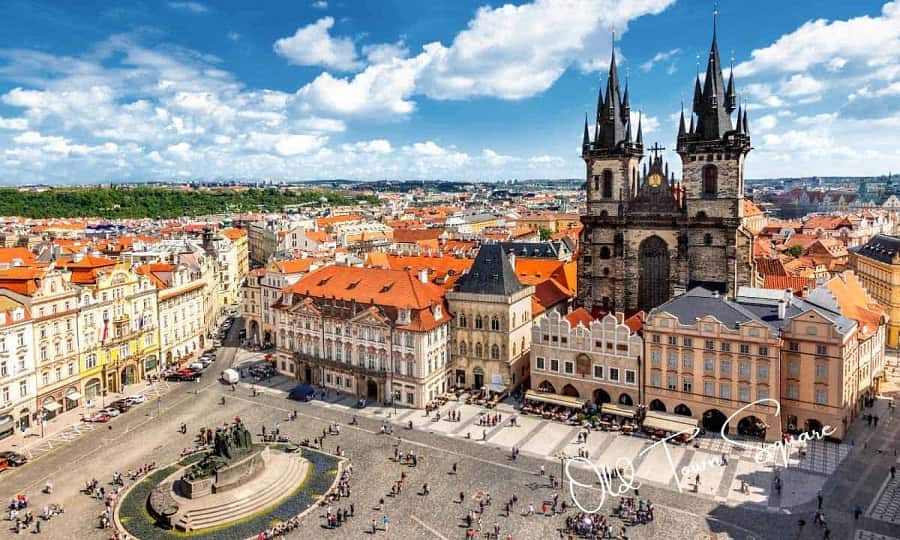
- First day in Prague and limited time → a classic Old Town highlights walk (the city “baseline”).
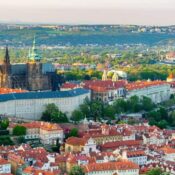
- You want scale and viewpoints → Prague Castle + Hradčany.
- You want a budget-friendly intro without a fixed price → a tip-based free walking tour (book ahead).
- You want “local Prague” beyond postcard sights → Letná / Karlín / Vinohrady neighborhoods.
- You want a softer rhythm and evening mood → legends and city stories at night.
- You dislike crowds or have a specific interest → a small-group or private tour.
If you have 2–3 days, the easiest high-success plan looks like this: day 1—Old Town basics, day 2—castle or a themed walk, day 3—local neighborhoods or an evening story tour. It removes planning stress and makes each day feel different.
Top walking tour formats in Prague
It’s usually smarter to choose by format rather than by the loudest title. Each option has its own pace, logistics, and “result” you’ll take away.
- Classic “Best of Prague” (Old Town highlights)
Best for: first-time visitors, short trips, anyone who wants the city to make sense quickly.
Pace: moderate, with frequent stops.
What you get: a clear mental map of key areas and symbols; often around 1.5–3 hours. - Prague Castle / Hradčany (views and big-picture history)
Best for: people who love history, panoramas, and the city’s “grand stage.”
Pace: moderate to more intense; uphill sections and stairs are common.
What you get: a different layer of Prague and strong viewpoints; often about 3–3.5 hours. Getting there by tram can save energy—tram 22 is often the simplest option if you don’t want to climb up from below. - Free walking tour (tip-based)
Best for: travelers who want a solid intro without paying a fixed price upfront.
Pace: moderate; groups are often larger.
What you get: a smart first-day overview—if you’re happy to book ahead. As a practical tip range, many travelers leave roughly 200–300 CZK (about €8–12) per person when the tour is genuinely good, sometimes more for an outstanding guide. - Josefov and Jewish heritage (depth over “as many spots as possible”)
Best for: anyone who wants context and a structured story.
Pace: calm to moderate, more explanation.
What you get: a coherent picture of the area; it’s worth noting whether a tour is mostly outdoors or includes interiors, where tickets may be included or purchased separately. - Evening legends and city stories
Best for: travelers who want atmosphere, narrow lanes, and a different mood of Prague.
Pace: unhurried, with pauses.
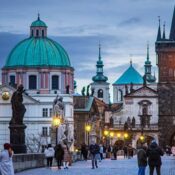
What you get: the city without daytime peak crowds and with beautiful evening light—great for your first night. - “Like a local”: Letná / Karlín / Vinohrady (modern neighborhoods)
Best for: travelers who’ve already seen the center or want real everyday Prague.
Pace: moderate, often with pleasant stops.
What you get: passages, courtyards, local streets, and viewpoints—discoveries without tourist noise. - Private or small-group walking tour
Best for: couples, families, and anyone who values comfort, clarity, and their own pace.
Pace: anything from very relaxed to very full-on.
What you get: control of rhythm, flexibility, and less compromise. - Hybrid: walking + Vltava river cruise
Best for: anyone who wants more panoramas with less strain on the legs.
Pace: softer, with a “break” on the water.
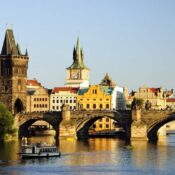
What you get: context on land + a fresh perspective from the river without feeling like a marathon.
Interiors vs. exteriors: a detail that can reshape your whole day
In Prague this matters most for the Castle and Josefov. Outdoor-only walks are usually simpler, shorter, and easier logistically. Tours with interiors can be richer, but they depend on timing, queues, and ticket rules. If your schedule is tight, an exterior-focused route is often the smartest choice; if you want to go inside and you’re ready for a longer day, interiors can be worth it.
Know before you go: 7 things that actually affect comfort
These details sound small, but they’re what separates “that was great” from “that was hectic.” They’re especially important for free tours and castle routes.
- Shoes: cobblestones can be slippery in rain or winter, and castle routes add stairs and climbs.
- Start time: morning means fewer crowds; evening means more atmosphere.
- Group size: smaller groups are usually more comfortable (you hear better, you wait less).
- Booking: popular routes—especially free tours—often fill up, so don’t rely on walking up.
- Buffer time after: leave room for coffee, a passage, a bridge revisit—often the best part of the day.
- Layers and water: pace changes, and Prague weather can shift quickly.
- Tickets and interiors: check whether they’re included and how much queue time might be involved.
After your tour, don’t try to “finish” the city with ten more stops. Pick 2–3 places that genuinely caught your attention and explore them at your own rhythm—that’s how Prague sticks.
FAQ
Are free walking tours in Prague really free?
Most are tip-based: there’s no fixed price, but tips are expected if you enjoyed it. It works best when you treat it as “pay for value,” not as zero-cost entertainment.
How much should you tip on a free walking tour in Prague?
As a practical guide, many travelers leave around 200–300 CZK (about €8–12) per person when the tour is very good. For a standout guide with strong pacing and genuinely useful tips, people sometimes give more.
Do you need to book a free walking tour in advance?
Often, yes. Popular tours can be fully booked, and some formats have group limits. Booking ahead removes the risk of showing up and not getting in.
Which walking tour is best for your first day in Prague?
A classic Old Town highlights tour is the safest start. It gives you a clear mental map—where areas connect and what’s worth returning to later.
How long do walking tours in Prague usually last?
Old Town overview walks often run about 1.5–3 hours. Castle routes are usually longer—around 3–3.5 hours—because of climbs, viewpoints, and more “big picture” context.
If you only have half a day, should you choose Old Town or the Castle?
For a first introduction, Old Town usually wins: you get the city’s basic logic without overdoing it. Save the Castle for a day when you have more time and energy.
What shoes are best for walking around Prague?
Comfortable city shoes with good grip. Cobblestones can be slippery when wet or icy, and castle routes include stairs and uphill stretches—foot comfort makes a huge difference.
Can you do walking tours with kids or a stroller?
Yes, but choose shorter routes with more pauses and fewer climbs. Old Town can be tougher because of cobblestones, and castle routes can be challenging because of stairs and elevation. In these cases, small-group or private formats are usually the easiest.
How is walking + a cruise different from a standard walking tour?
It’s a softer-effort format: the walking portion gives context and orientation, and the cruise adds panoramas and a leg break. It’s especially good on a packed day or when you want more rest.
The best walking tour in Prague is the one that matches your pace and your day plan. Pick the format (Old Town basics, Castle, free tour, legends, neighborhoods, or a hybrid with a cruise), check the effort level and logistics, and Prague will feel effortless rather than rushed.

Recent Posts