Best Prague Tour: The Best Way to See the City in One Day
Table of Contents
TogglePrague is the kind of city where the “best tour” doesn’t automatically mean the longest or the most famous. The best one is the tour that makes the city click: you finish it feeling oriented, not exhausted—knowing what matters, what you can skip, and how the pieces fit together. The easiest way to choose is to think in formats, not tour names: pace, logistics, time of day, whether you want interiors, and what you want to take away from the day.
Quick pick: what to choose for you
Start with three questions: Is this your first time in Prague or have you already seen the postcard highlights? Do you want a fact-rich overview or more atmospheric storytelling? Are you happy to walk a lot, or do you want an easier rhythm? Then decide whether “going inside” is important (castle interiors, museums, synagogues), or whether an outdoor route will be enough for this trip. Those few choices instantly narrow the field.
- First time in Prague and I want to understand the city fast → a classic “best of Prague” walking tour (Old Town + Lesser Town)
- I only have half a day → a compact city walk + one strong wow-moment (a viewpoint or a short river cruise)
- I want my own pace and stops “when it feels right” → a private tour with a flexible route
- I don’t want to walk too much / I need a break → a river cruise + a short stroll in the center
- I want history and context, not just views → a tour focused on symbols, architecture, and city stories
- I want to feel the city through taste → a food tour or beer & bites in a small group
- I’ve done the center, I want a different Prague → passages, courtyards, local neighborhoods, quieter corners
- I care about photos and panoramas → an early route or sunset viewpoints + a short city walk
If you want the safest “can’t-go-wrong” combination, pair a daytime “best of Prague” walk with an easy evening format (cruise or an atmospheric story tour). And if you’re short on time, don’t try to squeeze in three different themes—one great experience lands better than three rushed ones.
Top formats: the tours most often called the best in Prague
These formats aren’t “better” because of promises—they’re better because of what they deliver: a clear mental map of Prague, big panoramas, evening atmosphere, taste, or full control over pace. To keep it easy to scan, each option is one block: who it’s for, pace, what you get, and a short takeaway.
- Classic “Best of Prague” walking tour (Old Town + Lesser Town)
- Best for: first-time visitors, short trips, anyone who wants a solid overview.
- Pace: medium, with frequent stops and explanations.
- What you get: the clearest “city logic”—districts, landmarks, and how they connect.
- Quick takeaway: choose this if you want Prague to make sense in one day.
After this kind of tour, the city becomes readable—you’ll know where to return on your own and what you can skip without regret. It’s the best “foundation” for everything else you’ll do.
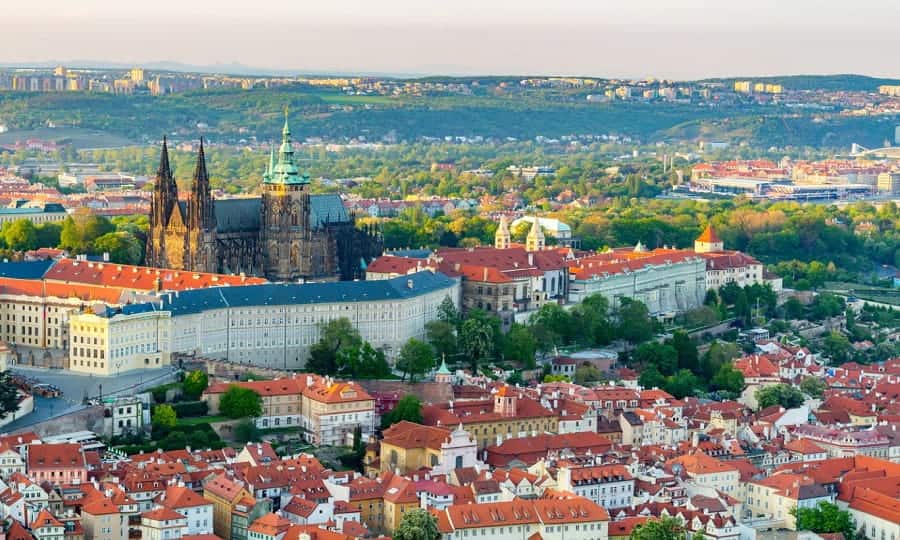
- Prague Castle tour (for scale and views)
- Best for: history lovers, panoramic viewpoints, and “big scene” city moments.
- Pace: medium to intense, depending on timing, route, and queues.
- What you get: a different layer of Prague—scale, context, and those iconic horizons.
- Quick takeaway: best if you have 2+ days and want one major historic block.
This is where real logistics matter: there may be security checks at entrances, and large luggage is a hassle. If interiors matter to you, build in extra time so you’re not rushing from point to point.
- Evening legends & city stories tour
- Best for: atmosphere, storytelling, and a more cinematic Prague.
- Pace: unhurried, with longer pauses.
- What you get: lanes, lights, mood—often with fewer peak crowds than midday.
- Quick takeaway: perfect for your first night or after a busy day.
It’s a great reset: you meet Prague again, but in a different tone. It also works especially well in autumn and winter when darkness arrives earlier.
- Vltava river cruise (short or with dinner)
- Best for: a break from walking and a new perspective on the skyline.
- Pace: very relaxed.
- What you get: postcard views without the crowds, plus a true “vacation” rhythm.
- Quick takeaway: choose it if you want “Prague like a movie” with minimal effort.
A cruise fits neatly between two walking-heavy days or as an evening plan when you don’t want hills, stairs, and cobblestones. It’s also one of the easiest ways to get beautiful angles of the city.
- Food tour / beer & bites
- Best for: tasting Prague with a plan, without spending the evening guessing where to go.
- Pace: comfortable, with pauses.
- What you get: a clear “what to try” logic, how to order with confidence, and local context.
- Quick takeaway: best for an evening when you want both a stroll and a real break.
This is especially useful early in your trip, when you’re still learning neighborhoods and trying to avoid tourist traps. After a good tour, choosing places on your own becomes much easier.
- Private tour (built around you)
- Best for: anyone who dislikes big groups, travels with family, or has specific interests.
- Pace: fully flexible—from very easy to very full-on.
- What you get: maximum route control and noticeably less stress.
- Quick takeaway: best if comfort and control matter most.
Private tours shine when you want kid-friendly pacing, photo stops, or the freedom to adjust plans if the weather shifts. You’re not “keeping up”—you’re choosing.
- Alternative Prague (passages, courtyards, local neighborhoods)
- Best for: repeat visitors or anyone who wants details beyond the postcard center.
- Pace: medium.
- What you get: discovery—those “how did I miss this?” moments without the mandatory highlights.
- Quick takeaway: best on day 3–4, once the center feels familiar.
This format gives you what classic routes sometimes don’t: surprise. It also balances a trip if your previous days felt very “main sights” heavy.
What you’ll actually see: the “best of Prague” core
Most top routes—walking, private, or overview days—share a common core of places. It helps to know this so you can compare options: if your tour covers most of this list, you won’t feel like you missed the basics. Then you can add your “second layer”: food, legends, quieter districts, or a day outside the city.
- Old Town Square and the Astronomical Clock — the city’s easiest “starting point”
- Charles Bridge — a defining line of Prague, best early or late
- Lesser Town — the atmosphere, the slopes, the postcard streets
- Prague Castle and panoramas — scale and views the center can’t match
- The Vltava riverbanks — rhythm, perspectives, and breathing space
- Josefov (the Jewish Quarter) — for deeper context beyond the postcard
Timing matters. Charles Bridge is at its best in the early morning, when the city still feels quiet. And for the Castle and viewpoints, build in buffer time—those places pull you in, and it’s easy to stay longer than planned.
Practical criteria: how not to regret your choice
First, interiors vs outdoor route. Many tours deliver an excellent route and a strong story but don’t necessarily include interior visits or entry tickets. If going inside is important to you, pick a format where that’s clearly included, or plan interiors as a separate block without rushing.
Second, Castle logistics in real life. Getting into the Prague Castle area can involve checks, so don’t schedule it too tightly against other plans. And avoid carrying large luggage—moving between districts is simply more comfortable when you travel light.
Third, public transport without surprises. If your route involves trams or the metro, make sure you validate/activate your ticket properly before riding. It’s a small detail, but it can ruin the mood when you’re rushing to meet your tour.
Fourth, pace and feet. Prague’s cobblestones and slopes feel different from flat-city walking: there’s more standing, stairways, and gradual climbs. If you want an easier day, pair a walk with a cruise or a tasting—not two long walks back-to-back.
Fifth, time of day. In high season, midday is often the most crowded. Early hours feel completely different: more space, better photos, and a calmer rhythm. Evenings work beautifully for atmosphere-driven formats—often more memorable than a “checklist” route.
How many days you need—and when to go for the best experience
If you have 2–3 days in Prague, the best structure is “foundation + one signature format”: a “best of Prague” walk as your base, then add either the Castle, the river, or a food-focused evening. With 4–5 days, the city opens up comfortably—you can cover the core without a marathon and still have time for neighborhoods, museums, and the kind of pauses that make a trip feel good.
For walking comfort, spring and early autumn are often the sweet spot. December is its own scenario: shorter daylight and colder weather, but a special mood with markets and city lights. In that period, shorter formats with warm breaks tend to work better than long walking marathons.
FAQ
What’s the best tour in Prague for first-timers?
A classic “best of Prague” walking tour through Old Town and Lesser Town. It gives you orientation and context fast, so the rest of your trip feels easier.
Is a self-guided route enough, or is a guide worth it?
Self-guided works if you love moving at your own pace and reading context yourself. A guide is especially helpful when time is limited and you want Prague to “click” quickly—or if you enjoy asking questions and hearing the city’s stories.
How much time should I plan for a “best of Prague” format?
For a classic walking tour, 2–3 hours is comfortable. Add the Castle or interiors, and it can easily become half a day without feeling rushed.
What’s better: a Prague Castle tour or a city-center walk?
Start with the center if it’s your first day—it gives you the city’s basic logic. The Castle is a great next step, adding panoramas and a different historic layer.
What’s usually included—and what can be extra?
The route and guiding are typically straightforward, but interior visits and entry tickets can sometimes be separate. If going inside matters, choose a format where this is clearly included.
When should I go to avoid crowds?
Mornings are the calmest in the center and often the best time for Charles Bridge. Evenings are ideal for atmospheric formats—legends, cruising, and relaxed tastings.
How does transport work—anything important about tickets?
The simplest rule: have a ticket ready and validate/activate it before riding. It removes stress when you’re moving between districts or rushing to a meeting point.
Is a river cruise worth it if I’m short on time?
Yes—especially if you want skyline views with minimal walking and a quick reset between busy blocks. It’s one of the easiest ways to see Prague from a fresh angle.
How do I know if I need a private tour?
If you dislike big groups, want your own pace, travel with kids, or have specific interests, a private format gives you the most control and comfort.

Recent Posts