Best Prague Free Walking Tours: Ranking by Themes, Pace, and Crowds
Table of Contents
ToggleA free walking tour in Prague is one of the easiest ways to “read” the city fast: in a couple of hours you understand how the neighborhoods connect, where the key squares and river views sit, and what’s worth doing next on your own. This format is especially useful on your first or second day, when you want a guided walk with structure—without building a complicated itinerary. To end up with the best experience, the trick is choosing the right theme, pace, and group style, not just any “free tour.”
How a free walking tour works in practice
In Prague, “free” usually means there’s no fixed price: at the end you leave a tip for the guide at your discretion—whatever feels fair for the quality and usefulness of the tour. Because these walks can be popular, many of them ask you to register or reserve a spot. That isn’t a payment—it’s a way to keep groups manageable so people can actually hear and enjoy the route.
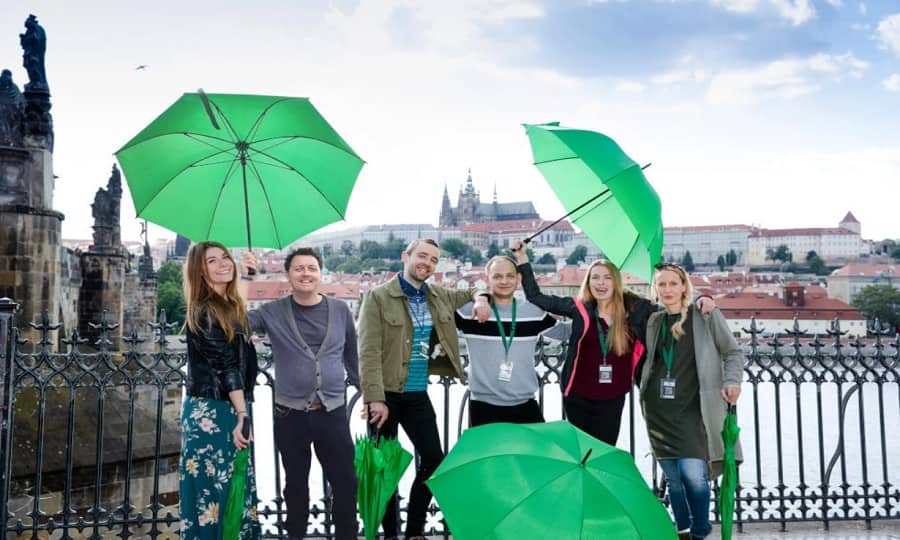
A typical tour lasts around 2–3 hours, though the exact timing can vary depending on pace and how interactive the group is. Most tours run in almost any weather, so the real question isn’t “will it rain,” but whether you’re dressed to stand comfortably at stops and walk Prague’s cobblestones. One more reality: guides rarely wait long if you’re late, so it’s smart to arrive early and find your group by the guide’s marker (umbrella, sign, badge).
Quick choice: which free walking tour is best for you
The easiest way to decide is to start from your day’s scenario. Sometimes you want a quick “mental map” of Prague, sometimes a deeper themed story, and sometimes an evening atmosphere. Once the scenario is clear, the best format becomes obvious.
- First day in Prague and I want basic orientation → a classic Old Town / city highlights tour
- Short on time and I don’t want long walks → a compact route focused on the essentials
- I want more depth, not just a highlights sprint → a themed tour (Jewish heritage or 20th-century history)
- Traveling with kids or I dislike long standing/listening blocks → a lighter route with simpler stories and shorter stops
- I want viewpoints and great photo angles → a scenic walk built around panoramas and perspectives
- I want a nighttime vibe → legends, ghost stories, and “after dark” Prague
- I’ve already done the center and want a different Prague → alternative neighborhoods with a modern, local angle
After you pick a scenario, check two practical details: language and group size. English is the most common, and other languages depend on the specific schedule. If you like asking questions and hearing every explanation clearly, smaller groups usually feel much better. If you mainly want the general vibe and a structured walk, a larger group can still be fine.
What you’ll usually see on a free walking tour
Most classic city-center routes use a few “anchors” that make Prague easy to understand: Old Town squares and historic façades, places tied to legends and symbols, river or viewpoint moments where the city “clicks” into a single picture. Many tours also include practical context—where crowds concentrate, which streets feel better in the morning versus evening, and where it makes sense to pause afterward.
It also helps to expect the format correctly: free walking tours are usually an outdoor, story-and-orientation experience. They generally don’t go inside paid attractions (interiors, museums, certain historic sites). Those are typically something you visit separately later, when you’ve set aside a dedicated time slot and ticket.
Top free walking tour formats in Prague
There isn’t one “best tour” for everyone, but there are formats that reliably deliver a great experience for different traveler types. Choose the type that matches your pace and interests and your chances of loving it go way up.
- Classic city highlights route in the historic center
The best pick for day one: you get key orientation, understand how the main areas connect, and stop feeling lost among beautiful streets. The pace is usually moderate, with clear stops and a logical route. - Scenic walk with viewpoints and photo spots
Ideal if you want less dates-and-details and more atmosphere. These tours focus on angles, perspectives, and places where Prague looks its most striking. The rhythm is often calmer and works well on a relaxed day. - Jewish heritage and neighborhood stories
A strong option if you want depth and context rather than just ticking off landmarks. These tours often explain a lot outdoors and treat paid interiors as an optional follow-up you can do on your own. - 20th-century Prague: communism, change, everyday life, symbols
This format helps you understand Prague as a living city with a recent history that still shapes it. It’s usually less “postcard Prague” and more meaning and context—often making your later sightseeing feel richer. - Legends and evening stories
Perfect when you want mood and emotion rather than a standard daytime overview. Prague feels different after dark, and these tours often feel like an “event,” especially if you’ve already done the classic center. - Alternative neighborhoods and modern Prague
Best for stepping beyond the most touristy streets and seeing a more local rhythm. Expect more modern context, neighborhood character, and ideas for what to do outside the standard checklist.
After choosing a format, do a quick reality check for the day: weather, energy level, what you’re doing afterward. Sometimes the best choice isn’t the “deepest” tour, but the one that fits your schedule and leaves you with energy for the evening. And if you plan museums or the castle later, pick a route without overly long walks.
What to check before you start so you’re not disappointed
Disappointment usually comes from mismatched expectations: a highlights tour feels “too shallow” if you wanted a deep theme, while a themed tour can feel “too slow” if you wanted rapid sightseeing. Ask yourself whether you want many spots or one strong story with detail. Also consider whether you prefer more walking or more standing-and-listening.
Cobblestones and occasional steps are normal in Prague, but they aren’t always easy with a stroller or if you hate uneven surfaces. And because multiple tours can gather at the same central meeting points, the simplest way to avoid confusion is to arrive early and identify the guide by the agreed marker.
Free tour etiquette: how to keep it comfortable for everyone
Free walking tours work best when everyone respects the flow: the guide keeps rhythm and storytelling, the group keeps attention and spacing. If you want to ask questions, do it during pauses so you don’t break the pace for others. If you realize the format isn’t for you, it’s perfectly fine to leave politely rather than stay frustrated and bring the mood down.
FAQ
Are free walking tours in Prague really free?
There’s usually no fixed price, but tipping at the end is the normal model. The amount is up to you and depends on how useful and enjoyable you found the tour.
How long do free walking tours usually last?
Most run about 2–3 hours, but timing can vary with pace, weather, and how many stops the group makes.
Do you need to reserve a spot in advance?
Often yes, especially in high season. Reservations help keep groups manageable and reduce the chance you’ll be turned away.
What language are tours in?
English is the most common. Other languages depend on the specific organizer and the day’s schedule.
How do you make sure you join the right group at the start?
In central areas several tours can meet at the same time. Look for the guide’s marker (umbrella/sign/badge) and match it with the tour theme. Arriving early makes this much easier.
Do free tours go inside attractions?
Usually not. Most routes are outdoor and focus on stories and orientation. Paid interiors and museums are best saved for a separate visit with a ticket.
What if the weather is bad?
Many tours run in most conditions, so shoes and layers matter. In cold wind and rain, standing at stops feels much colder than regular walking—bring a warm layer and rain protection.
Are free walking tours good for kids?
Yes, if you choose a lighter route with simpler stories and a comfortable pace. Shorter formats generally work best.
What if I don’t like walking a lot?
Choose compact routes with shorter distances and wear comfortable shoes. If accessibility matters (stroller/wheelchair), avoid routes with steep climbs and lots of steps.

Recent Posts